二度と単語を忘れない方法:間隔反復学習(SRS)の科学
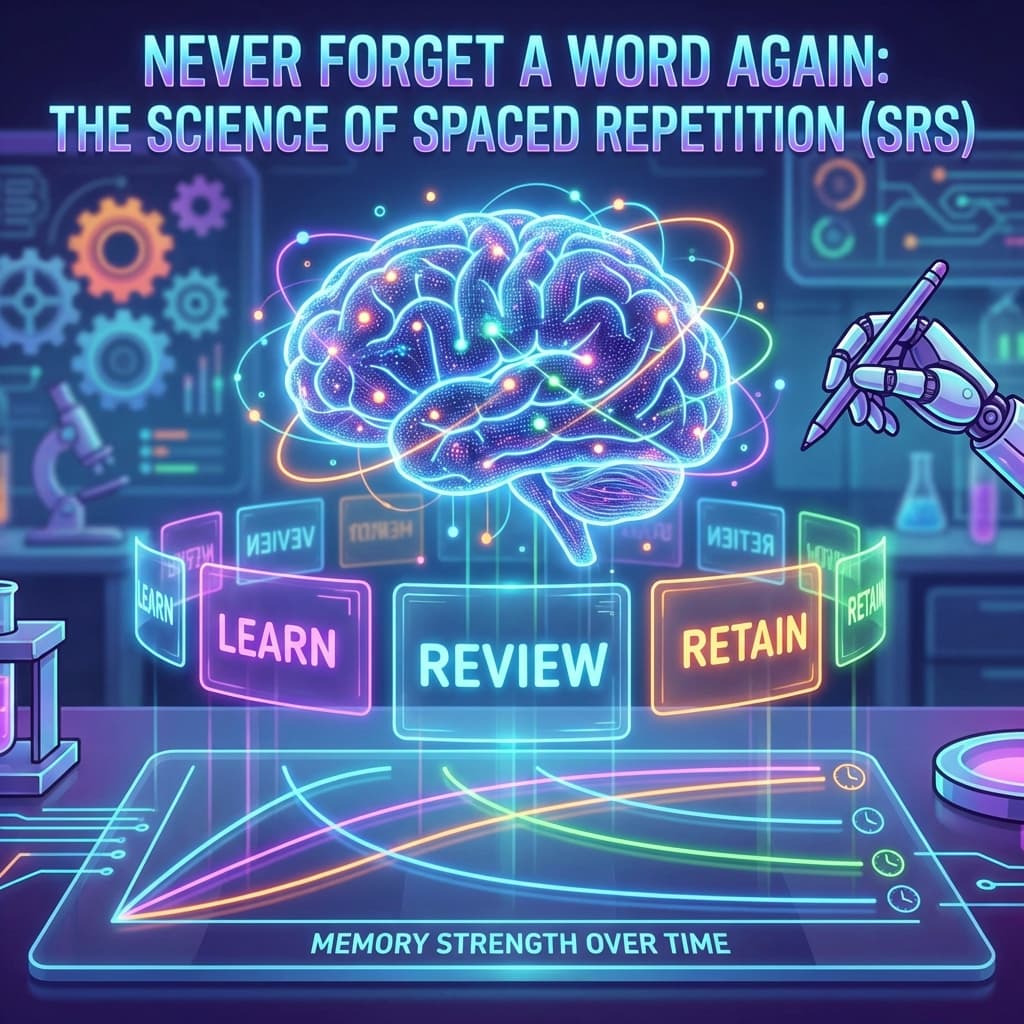
新しい単語を学ぶたびに、脳の「保存」ボタンを押すことができたらと想像してみてください。私たちはまだサイボーグではありませんが、間隔反復システム(Spaced Repetition Systems:SRS)はその技術に最も近いものです。もしあなたがまだリストを何度も読み返して語彙を復習しているなら、貴重な学習時間を無駄にしています。
忘却曲線(The Forgetting Curve)
1885年、心理学者のヘルマン・エビングハウスは「忘却曲線」を発見しました。彼は、私たちが情報を指数関数的に忘れることを発見しました。20分以内に、学んだことの40%を忘れます。1日以内に、70%が消えてなくなります。
しかし、彼はハックも発見しました:直後に復習することで、忘却プロセスが停止します。 さらに重要なことに、復習するたびに、記憶の減衰が遅くなります。
- 最初の復習:学習の1日後
- 2回目の復習:3日後
- 3回目の復習:1週間後
- 4回目の復習:1ヶ月後
復習の間隔を長くすることで(スペーシング)、最小限の努力で情報を永続的な長期記憶に移すことができます。
なぜ従来の単語カードは失敗するのか
紙の単語カードには欠点があります。「cat」や「hello」のような簡単な単語を、「existentialism(実存主義)」や「bureaucracy(官僚主義)」のような難しい単語と同じ頻度で復習してしまうことです。これは非効率的です。すでに知っていることに時間を浪費し、苦労していることに十分な時間を費やしていません。
アルゴリズムSRSの登場
Anki(およびLoglingoの内蔵アーカイブシステム)のようなデジタルツールはこれを解決します。これらはアルゴリズムを使用してスケジュール管理を行います。
単語を見たら、自分自身を評価します:
- 難しい/失敗: 「1分後にまた見せて。」
- 良い: 「明日また見せて。」
- 簡単: 「4日後に見せて。」
ソフトウェアは何千枚ものカードを管理し、忘れる直前に単語を復習するようにします。これが記憶の定着にとって最も効率的な瞬間です。
SRSを効果的に実践する方法
SRSは強力ですが、魔法ではありません。正しく使用する必要があります:
1. 一貫性が王様: SRSは毎日のアルゴリズムに依存しています。1週間サボると、「復習期限」が恐ろしい山(レビュー地獄)のように積み重なります。たった5分でも、毎日行ってください。
2. 文脈が女王: カードに孤立した単語を載せないでください。「run」とだけ書かないでください。「He runs a business(彼はビジネスを経営している)」と書いてください。文脈は意味と使い方の手がかりを提供します。
3. 詰め込みすぎない: 1日に50個の新しい単語を追加するのは野心的に聞こえますが、覚えておいてください:今日の50個の新しい単語は、来週の数百回の復習に相当します。持続可能にするために、1日5〜10個の新しい単語に留めてください。