Context is King: Why Learning Words in Isolation Fails
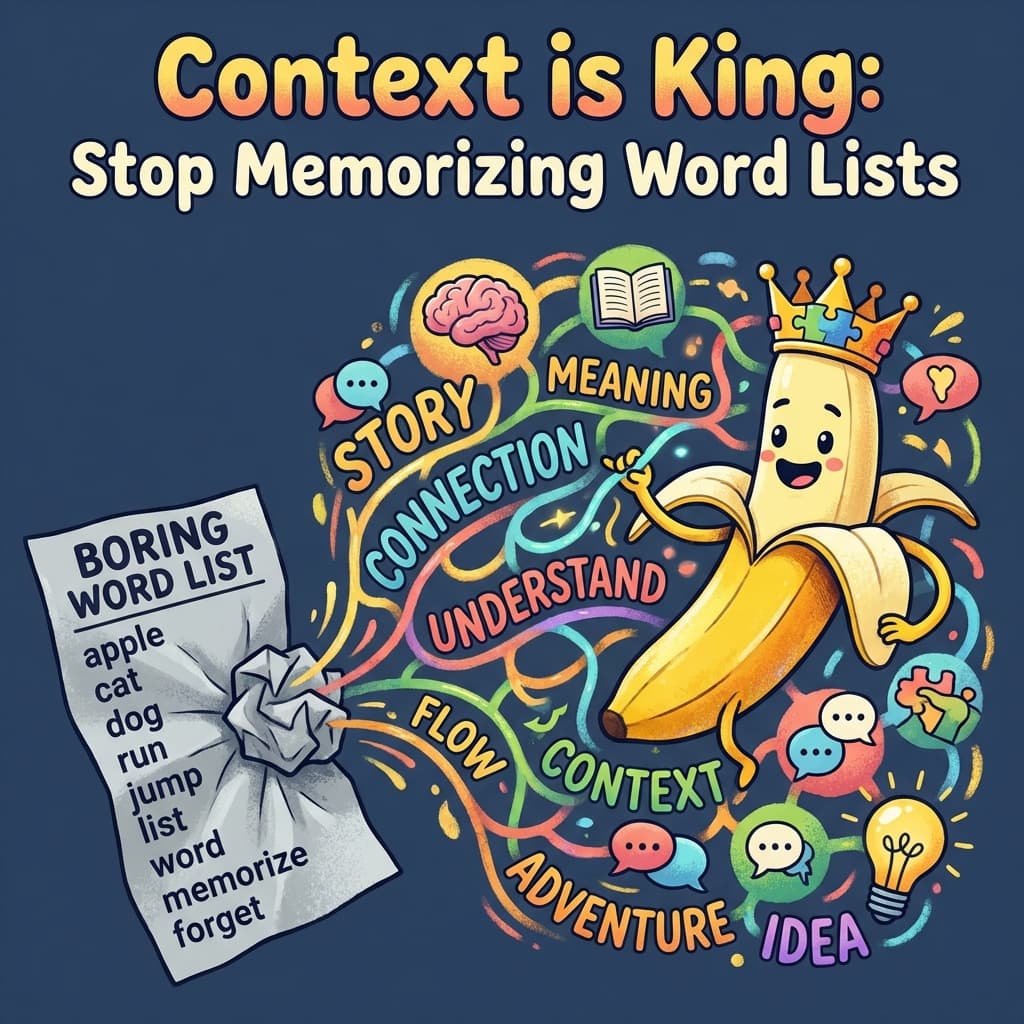
If I say the word "Run", what do you picture? A person jogging? A runny nose? Running a business? A run in a stocking? Without context, words are meaningless data points. Yet, most language learners spend hours memorizing isolated word lists.
The "Dictionary Trap"
The English word "Set" has over 430 definitions in the Oxford English Dictionary. Memorizing "Set = [Definition 1]" is a recipe for disaster. You aren't learning how language works; you are learning how a dictionary works.
Your brain craves connections. It remembers stories, situations, and emotions. It struggles with dry, isolated facts.
The Solution: Sentence Mining
Instead of "Word Mining," start "Sentence Mining." strict rule: Never save a word alone.
- ❌ Bad: "Ubiquitous" (adjective)
- ✅ Good: "Smartphones have become ubiquitous in modern society."
When you review the sentence, you learn grammar, usage, and tone automatically.
Power of Collocations
Native speakers don't speak in isolated words; they speak in "chunks" or collocations.
- You don't "do" a mistake; you "make" a mistake.
- You don't "say" a story; you "tell" a story.
Learning "Make a mistake" as one unit is 2x faster than trying to glue "Make" and "Mistake" together in real-time.